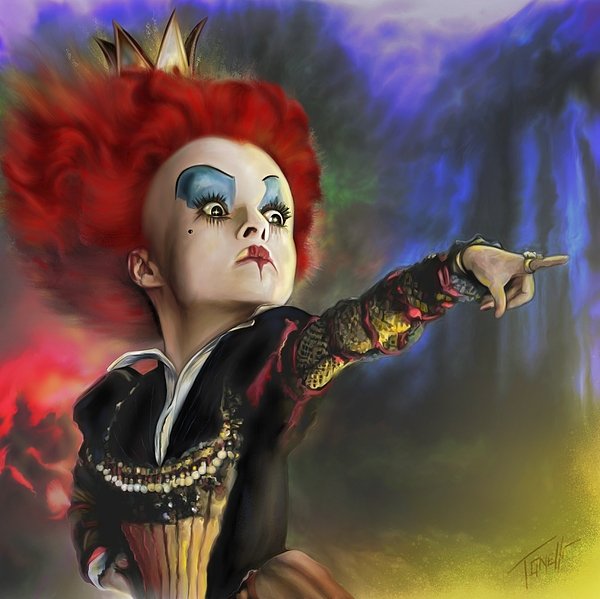
The world of Wonderland is a realm of curious characters, but few capture the imagination, and confuse it, quite like the Red Queen. Often depicted as a tyrannical monarch screaming "Off with their heads!" and wielding an army of playing cards, her true identity is far more nuanced, her origins distinct, and her legacy profoundly shaped by adaptation. We're here to cut through the noise, to delve into the Red Queen's real story, and explore how she became the iconic, formidable figure we know today.
She's a character shrouded in both literary precision and popular misconception, a fascinating blend of chessboard strategy and unhinged royalty. Join us as we uncover the layers of this captivating figure, from Lewis Carroll's original vision to her many modern incarnations.
The Original Game Master: Carroll's Chess Queen
To truly understand the Red Queen, we must journey back to Lewis Carroll's Through the Looking Glass. Here, she is not the same hot-headed monarch from Alice's Adventures in Wonderland (that's the Queen of Hearts). Instead, Carroll presents us with a character rooted firmly in the logic of a chess game. The Red Queen is literally a red queen chess piece, a swift and powerful figure who welcomes Alice into the game.
Initially, she’s portrayed as rude and domineering, but also surprisingly helpful. She explains the intricate rules of chess to Alice, showing her how pawns can be promoted to queens upon reaching the eighth square—a crucial piece of advice for Alice’s journey. She’s an antagonist in the sense that she opposes Alice’s side in the chess game, yet her interactions are cordial, even instructional. For a deeper dive into her foundational role and how she eventually transforms into Alice's black kitten, Kitty, you'll want to Explore Red Queens origins. Unpack Red. This initial portrayal is key to understanding her distinct place in Carroll's original works.
From Chess Piece to Cultural Icon: The Evolution of Her Majesty
Over the decades, the Red Queen has undergone a remarkable metamorphosis. The biggest reason for this shift? She's frequently amalgamated with other iconic Carroll characters, most notably the Queen of Hearts and sometimes even the Duchess. This fusion created a new, terrifying royal persona, one that became far more widely recognized than Carroll's original chess piece.
From animated classics to live-action blockbusters, the image of the Red Queen has been reimagined countless times. Disney's 1951 animated Alice in Wonderland is a prime example, where the chess-related Red Queen is fully merged with the card-playing, "Off with their heads!" Queen of Hearts. This amalgamation set the stage for many subsequent interpretations, shaping public perception of the character. To trace her journey across various media, including film, television, and stage, you'll find a wealth of information when you Explore Red Queen adaptations.
The Many Faces of Tyranny: Iconic Adaptations
The allure of a powerful, often cruel, queen is undeniable, and adapters have relished the opportunity to put their own spin on the Red Queen. In Tim Burton's 2010 film Alice in Wonderland, she is Iracebeth of Crims, a callous and paranoid ruler, infamous for her grotesquely large head and her marriage to the Knave of Hearts. This iteration, masterfully brought to life by Helena Bonham Carter, cemented a visual and temperamental standard for many modern audiences.
Video games like American McGee's Alice and Alice: Madness Returns cast her as a powerful, twisted final boss, often representing Alice's own psychological struggles. Even in television, such as ABC's Once Upon a Time in Wonderland, she appears as Anastasia, a complex character with a journey towards redemption. These diverse interpretations highlight her versatility as an antagonist, mentor, and even a tragic figure.
Decoding Her Majesty: Symbolism and Psychological Depths
Beyond her dramatic appearance and declarations, the Red Queen offers a rich tapestry for symbolic and psychological interpretation. In her original form, she embodies the rigid rules and swift movements of a chess game, representing the structured, sometimes nonsensical, logic that Alice encounters. She is a force of nature, moving effortlessly across the landscape, embodying a certain kind of unstoppable power.
When amalgamated with the Queen of Hearts, her symbolism expands to include tyranny, absolute power, and the terrifying caprice of unjust authority. Psychologically, she can be seen as a projection of Alice's fears, or perhaps an exploration of power dynamics and the struggle against oppressive forces. There's a deep well of meaning to plumb here, and to truly understand the layers of her character, you'll want to Explore the Red Queens Meanings Red.
A Royal Wardrobe: The Visual Identity of the Red Queen
The Red Queen's image is undeniably striking. While Carroll's original description might have been simpler, adaptations have crafted an iconic visual language for her. The color red itself is paramount, symbolizing power, passion, danger, and royalty. Crowns, elaborate gowns, and stern expressions are common motifs.
Tim Burton's Iracebeth, with her distinctively oversized head, has become a particularly memorable visual, creating a physical manifestation of her psychological deformities and tyrannical nature. Whether she's surrounded by playing cards or reigning over a chessboard-like landscape, her visual presence is always commanding, and often intimidating. To delve into how artists and designers have brought her to life through stunning attire and unforgettable aesthetics, be sure to Explore Red Queens iconic look.
Her Reign Never Ends: The Enduring Legacy
The Red Queen, in her various incarnations, has left an indelible mark on popular culture. She's not just a character; she's an archetype. Her pronouncements and imposing presence have resonated far beyond the pages of Carroll's novels, influencing countless works of fiction, art, and even fashion. She embodies the complex blend of absurdity and menace that makes Wonderland so captivating.
Her legacy is one of both original literary genius and phenomenal adaptability. She serves as a powerful reminder of how characters can evolve and take on new meanings through the collective imagination, becoming symbols that transcend their initial context. Her continued presence in our cultural consciousness speaks to the timeless appeal of a compelling antagonist, a powerful ruler, and a figure who challenges the very notion of order. To understand the full scope of her influence across various cultural landscapes, we highly recommend you Explore the Red Queens legacy.
Beyond the Looking Glass: The Queen's Ever-Expanding Domain
The Red Queen’s journey from a chess piece in Through the Looking Glass to a reigning monarch of pop culture is a testament to the enduring power of storytelling and character reinvention. She reminds us that even the most well-defined characters can hold multiple truths and evolve with each new interpretation. As new artists and storytellers continue to explore the depths of Wonderland, we can be sure that the Red Queen will continue her reign, challenging perceptions and captivating audiences for generations to come. Her complexity ensures that her story is never truly over, always ready for another move across the board of imagination.